Friday, 12 September 2014

A2 LL - 3 WAY COMPARISON - SOME BASICS

A2 ENGLISH LANGUAGE AND LITERATURE
ELLA 3 COMPARATIVE ANALYSIS AND TEXT PRODUCTION
COMPARATIVE ANALYSIS – SOME BASICS

Planning the three way comparison commentary

I suggest the following planning process to write a successful three way comparison commentary.
 
Firstly, read text one and identify - this means underline quotations - on the audience, purposes, features of genre and attitudes to the main topic of the question. On this first reading of the first text you should also identify the sub-topics of the first text. Expect to identify between 4 to 6 sub-topics.
 
Secondly read text two and identify  - this means underline quotations - on the audience, purposes, features of genre and attitudes to the main topic of the question. On this first reading of the second text you should also identify the sub-topics. Some of these will have been presented in text one. Look out for these especially. They will form the basis of your commentary. Expect to identify between 4 to 6 sub-topics.
 
Thirdly read the third text and identify  - this means underline the quotations - on the audience, purposes, features of genre and attitudes to the main topic of the question. On this first reading of the third text you will have a good idea of what the sub-topics will be because they were presented in text one and text two. Expect to identify between 4 to 6 sub-topics. These comparative sub-topics along with comparative audience, purposes genre and attitudes to the main topic will form the basis of your commentary.

Once you have done this you should read the texts again. Focus on the quotations you have already identified and identify language and literary features along with the effect of these features on an audience.

Now you are ready to begin writing your commentary.

See below for a recommended structure for your commentary.

Below is a table of the key features you must address in your three way comparison.

FEATURE
COMMENT
EXAMPLE
Mode
Identify whether the text is spoken or written
 
Register
Identify quickly the register of the text. Observe its formality / informality.  Identify also if the texts have a semantic field.
 
Subject
Identify specific comparative sub topics present in each text. There may be 4 - 6 sub topics. Analysing and comparing these sub topics will form the main part of your essay. A common example of a sub topic will be the attitudes each writer or speaker has to the main topic.  

The other analytical comparative paragraphs will be made up of comparing such topics as audience, purpose and genre.
 There are two types of sub topics.

There are sub topics that are specific to this actual question paper. The exam board will choose texts and extracts that can be compared quite carefully. There maybe 4 - 6 of these.

There are sub topics that are present in every question. These are audience, purpose, genre and attitudes towards the unified topic.
Genre
Identify the genres and sub-genres of each text.
for example article, novel and transcript. Also identify sub-genre, e.g. polemical article, romantic fiction or  transactional/interactional – for spoken language.  Also be aware of different genres e.g. descriptive, dialogue, narrative, anecdotal writing.
Audience
 
Who is the target audience?
For example: public, private, general, exclusive
Purpose
What is the dominating purpose of the text? Be general
 
But also be specific
 
All texts have more than one purpose. Identify a secondary general purpose and then be specific
For example: inform, persuade, instruct, entertain
 
For example:  advise, order, proclaim, interrogate
Context
Read the rubric that introduces each text it will contain helpful points for your reading. Consider relevant social / features.
 
Attitude
Comment on the explicit and or implicit attitudes, values, assumptions the narrator adopts towards the key topic. Also note attitudes expressed by other voices in each text.
For example: sympathetic, unsympathetic, angry, tolerant 
Analysis
Identify the different language and literary features used in each text. Ensure that for each text you identify literary and linguistic features
For example: linguistic – grammar, syntax, lexis, register
 
For example: literary – imagery, phonology, rhetoric
 
For example: spoken features - fluency and non fluency features

A recommended structure for your commentary

My recommendation for structuring the 3 way analytical comparison commentary is to write an introduction. Then analyse your first text. Thirdly analyse your second text making comparative comments to your first text. Then analyse your third text and make comparative comments on text two and text one. Finally write a brief conclusion.
In your analysis and comparison refer specifically to audience, purpose and genre as well as mode, main subject and sub topics, register, attitudes and context, woven through each analytical and comparative paragraph.

Comparison
Presentation of the topic and writing style
 
Comment on the presentation of the comparative topic. And comment on comparisons of genre, audience and purpose, mode, register, subject, attitudes and context. Remember that comparison means focus on similarities and or differences. 
 

A 3 way comparison commentary structure

Introduction
Define key topic
Summarise mode, register, subject audience, purpose & genre for each text
 
Text 1
Analysis
 
Text 2
Analysis + comparison to Text 1
 
Text 3
Analysis + comparison to Text 2 & 3
 
Conclusion
Short summary of key points of each text and comparative points
 

Friday, 5 September 2014

A2 LL - CUPCAKES - FIRST CLUSTER

This is the first cluster of articles we will be studying from Cupcakes and Kalashnikovs. So make this a top priority in your Cupcakes reading. I intend to discuss Mountainsides of Hell first and Dachau last.

Make notes in your reading journal using the questions already distributed.

  • Dachau
  • Mountainsides of Hell
  • Regarding the Torture of Others
  • The Right to Life: What Can the White Man....Say to the Black Woman? 

A2 LL - ELLA 3B - CUPCAKES & KALASHNIKOVS - SOME BASICS

In the exam you will have to recast an article from one of the following sections from Cupcakes and Kalashnikovs:

  • War
  • Politics, Race & Society
  • Sex & Body Image
  • Interviews & Icons
You must keep a reading journal and read the 39 articles independently.

I will issue you with a hard back exercise book that you can use as a reading journal.

As you read them carefully you should

  • summarise the main points in each article
    • underline points and annotate the text
    • identify the main structure or sections of the article
    • you could give a lable or a title for each paragraph of the article

  • identify which points are facts and which points opinions
    • a fact is: "a thing that is known or proved to be true"
    • an opinion is: "a view or judgement formed about something, not necessarily based on fact or knowledge."

  • note down the attitudes and assumptions the writer has to the subject
    • one way to do this is to identify emotive words and phrases and consider what the emotions are evoked
    • another way might be to consider the motivations of the writer. Are they just informing or perhaps they want to persuade readers to a specific point of view.

  • make sure you understand all words and phrases you don't understand
    • download a dictionary app to your mobile. I use dictionary.com

  • research the historical context of the article
    • make a note of the date, writer and publication of the article and consider and perhaps do a little research on the writer, contemporary events and publication 
    • identify key words and phrases that link relevant news and topical issues and use google to do a little research  

A2 LL - ELLA 3 COMPARATIVE ANALYSIS AND TEXT ADAPTATION - SOME BASICS

UNIT 3 – ELLA 3: Comparative Analysis and Text Adaptation – the final examination.
60% of A2 marks, 30% of total A Level marks. 2 hours & 30 minutes examination. 100 marks

This unit extends the knowledge and skills of combined literary and linguistic analysis, which the AS level programme introduced. The unit gives you the opportunity to explore a selection of journalistic OR travel writing, as well as analysing a range of different genres of writing.

Section A: Unseen 3- way comparative analytical essay. 60 marks

Throughout the year you will be studying a range of different kinds of writing connected by theme. You will focus on comparing texts from different contexts and genres. You will develop the skills needed to write an extended, comparative, analytical essay for the examination.

Question 1: You will read three different texts – one of these will be a piece of spontaneous speech, analysing how the writers and the speakers communicate their response to a connecting theme. Your analysis should include a consideration of the following:
• writers’ and speaker’s choices of vocabulary, grammar and style
• the relationship between the texts and the significance of the context on language use.

Section B: Recasting task plus analytical commentary on language choices. 40 marks

You will also be studying a collection of travel literature or journalistic writing. You will develop your ability to recast an extract for a different audience and purpose. Finally, you will also write a short commentary on the writing choices you have made in your recast text. The key assessment here is of your writing skills.

Question 2: You will be asked to select appropriate material from an extract from a chapter or article taken from the set text you have been studying and adapt it for a different specified genre, purpose, context and audience. You will be asked to recast the original text using a different written mode, for example, a leaflet, and letter or newspaper article. You will also write a commentary in which you will be asked to comment on the language choices you made in your recasting. Your answer should include a consideration of the following:
• demonstrate expertise and creativity in using language appropriately for a different
purpose, audience and genre
• selecting and applying relevant concepts and approaches from an integrated linguistic
and literary study, using appropriate terminology and accurate written expression.

You will need to buy a copy of the anthology as soon as possible.

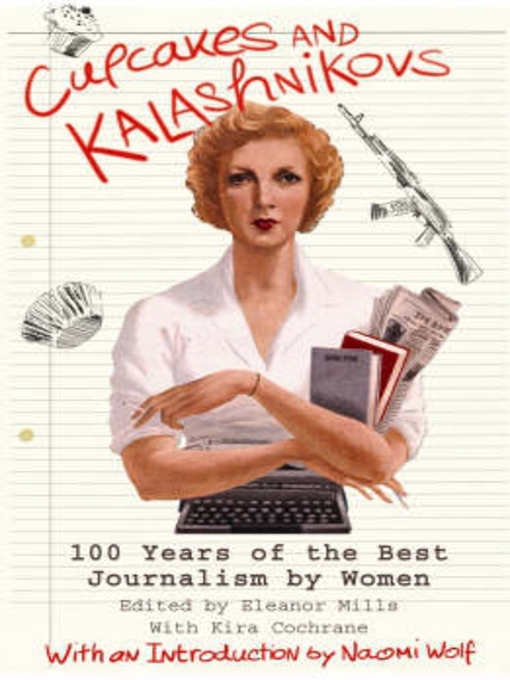
The text you will need to buy is ‘Cupcakes and Kalashnikovs’ edited by Eleanor Mills

A2 LL - Books to buy

Click here for a link to amazon where you can order and buy a copy of the compulsory set text, Cupcakes and Kalashnikovs. You must buy this book as soon as possibe.


Click here for a link to amazon where you can order and buy a copy of the course book AQA A2 English Language and Literature A.You are studying syllabus A.

IB ENG SL / A2 LL - POETRY IS

Poetry is.............

 
“Poetry, the best words in the best order”
S.T. Coleridge
“Poetry is the art of using words charged with their upmost meaning”
Dana Gioia
“It should strike the reader of a wording of his own highest thoughts and appear almost a remembrance”
John Keats
“Poetry is truth seen with passion”
W.B. Yeats
“Poetry cannot be defined, only experienced”
C Logue
“Poetry is the spontaneous overflow of powerful feelings; it takes its origin in emotion recollected in  tranquillity”
William Wordsworth
“It is a widening of consciousness, an extension of humanity”
David Constantine
“A poem should not mean But be”
Archibald MacLeith
Poetry is that
which arrives at the intellect
by way of the heart”
R.S. Thomas
Poetry is a way of talking about things that frighten you”
Mick Imlah
Poetry is “a little concoction of words against death”
Miroslav Holub
“In the dark times
Will there also be singing?
Yes. There will also be singing
About the dark times”
Bertolt Brecht
“In the deserts of the heart
Let the healing fountain start
In the prison of his days
Teach the freeman how to praise”
W.B. Yeats
“Poetry is a zoo in which you keep demons and angels”
Les Murray
“Poetry is the voice of spirit and imagination and all that is potential as well as of the healing benevolence that used to be the privilege of the Gods”
Ted Hughes
“To see a world in a grain of sand
And a heaven in a wild flower
Hold infinity in the palm of your hand
And eternity in an hour”
William Blake
“These fragments I have shored against my ruin”
T.S. Eliot
“Poetry comes out of wonder, not out of knowing”
Lucille Clifton
“Poetry is a place where all the fundamental questions are asked about the human condition”
Charles Simic
“Poetry is a brilliant vibrating interface between the human and the non-human”
Edwin Morgan
“Poetry can tell us what human beings are”
Maya Angelou

IB ENG SL / A2 LL - What is poetry?

Click here for a short video clip that defines poetry

This Is Just To Say

I have eaten
the plums
that were in
the icebox
 

and which
you were probably
saving
for breakfast
 

Forgive me
they were delicious
so sweet
and so cold


By William Carlos Williams

Thursday, 4 September 2014

IB ENG SL - TALES FROM OVID - CLASS POEMS

It is vital that you buy the first two texts we are studying as soon as possible.

These texts are Tales from Ovid by Ted Hughes and Othello by Shakespeare. I strongly recommend that you buy The Oxford School Shakespeare edition of Othello

Below is a list of the poems we will be studying in class from Tales from Ovid by Ted Hughes. However you should read widely from the collection reading and studying the poems elsewhere - making sure you make relevant notes in your reading journal. Choose one other poem not discussed in class or listed below and prepare a 5 - 7 minute presentation on the poem. You will give this presentation immediately after half term.

All students must have read the poems we will be discussing in class before the lesson date listed below. Students have been allocated a specific poem listed below and should be prepared to give a few introductory comments on the poem as well as make significant contributions to class discussions.

There may be a number of introductory comments you can make about your allocated poem. These include comments about the context of the poem, the main plot and structure, the moral or key message, comment on key themes, what makes the poem suitable for an ancient Roman or modern English audience, the relationship between God's and people, the presentation of male and female characters, symbolism, settings, the narrator, speech and dialogue, digressions, the language of the poem, or anything that interests you.

  • Pyramus and Thisbe - Diana & Janira - Friday 12 [19] September
  • Midas - Nicolo - Thursday 25 September
  • Tiresias - Sophie - Friday 26 September
  • Actaeon - Lorenz - 3 October
  • The Rape of Prosipina - Natasha & Mathieu 17 October
  • Tereus - Max & Marina - Friday 24 October
Individual presentations and introduction to the poetry anthology - Thursday 6 November & Friday 7 November

Wednesday, 3 September 2014

IB English SL - Books to buy

In the first year we will study

Othello  by Shakespeare and The Great Gatsby by F. Scot. Fitzgerald for Detailed Study - leading towards the commentary internal assessment in June 2015.

We will study The Bloody Chamber by Angela Carter and Tales from Ovid by Ted Hughes. We will also study an anthology of poetry that I will give you. This forms the Options unit - leading towards formal presentations internal assessment that will take place at the end of the second term.

Below is a link to the texts and editions to buy on amazon

Othello

The Great Gatsby

The Bloody Chamber

Tales from Ovid

there is also an anthology of poetry that I will give out to you

Friday, 22 August 2014

A2 LL - COURSEWORK BASICS

A2 ENGLISH LANGUAGE AND LITERATURE
ELLA 4 COMPARATIVE ANALYSIS THROUGH INDEPENDENT STUDY
POETRY ANTHOLOGY – IMPORTANT COURSEWORK INFORMATION


TASK: You will write an essay comparing and contrasting the ways in which a poetry text – 3 poems from one poet - compares and contrasts with either another poetry text – 3 poems from one poet or one short story – on one specific theme or feature common to both writers.

WORD COUNT: 2000 – 2500 words

MARKING: Essay marked out of 60. 20% of A Level


SOME RULES:

· You are allowed to hand one draft of your essay in order to receive verbal feedback and improve your writing.

· Your essay must include close, detailed analysis of the language used by both writers. Drawing from integrated language and literature analytical frameworks.

· The essay must include references to the text’s political, historical and cultural contexts at its production and its reception.

· The essay must make explicit the attitudes and assumptions made about the topic being written about. 

· Your essay must include a full bibliography.

· You must attach with your completed essay a copy of the texts you used for the essay.

· You must attach with your completed essay a copy of the first draft of your essay.


DEADLINES:

Essay titles confirmed w/b 8th December

Completed essay plan w/b 15th December

First draft w/b 9thJanuary

Final Essay 11th February 2015

Thursday, 21 August 2014

A2 LL- comparative paragraph

1 Make a point - a topic sentence
2 Expand on the point / Introduce the quotation
3 Quote a short phrase or word
4 Make between 2 and 4 comments on the quotation

Here are some comments you can make: Choose 2 - 4 of these per paragraph.

1 Comment on how the quotation supports the point you made in the topic sentence
2 Identify a key language or literary feature used in the quotation
3 Comment on the purpose or the effect of the feature
4 Comment on the attitudes / tone / voice expressed in the quotation
5 Comment on the meaning or symbolic meaning of key words in the quotation
6 Write a bridge or connecting word or phrase and then

7 Introduce a quotation from the comparative text
8 Quote a short word or phrase
9 Make between 2 and 4 comments on the quotation

Here are some comments you can make:

10 Comment on how the quotation supports the point you made in the topic sentence
11 Identify a key language or literary feature used in the quotation
12 Comment on the purpose or the effect of the feature
13 Comment on the attitudes / tone / voice expressed in the quotation
14 Comment on the meaning or symbolic meaning of key words in the quotation
15 Write a comparative or contrasting observation between the two texts.

Wednesday, 20 August 2014

Welcome

you have reached David Loffman's teaching blog.

This blog is set up for the the students I teach.

This year I'm teaching A2 English Language and Literature, AS English Language and Literature, International Baccalaurete Year 1 and GCSE English

You can use this blog to:

  • see class notes 
  • to follow up ideas and do further tasks 
  • as well as clarify concepts, reinforce ideas and skills covered in class 
  • to remind yourself of homework tasks and deadlines
  • to learn about specific study skills such as summary or note taking
  • to look at topics in detail

Please let me know how I can improve this blog.

To find posts that are relevant to your course you need to look to the top right column next to this post. Under the heading 'Click on Your Course Here'. Then click on the relevant course title. All the posts relevant to your course will appear. The most recent first. If you are looking for an older post, then click on Older Posts and more will appear.

Thursday, 22 May 2014

A2 ENGLISH LIT - SOME INTERESTING QUOTATIONS

from Songs of Innocence and Experience by Blake and The Rivals by Sheridan: Eighteenth-century Civilization Exposed / Celebrated by Julian Thompson

'As Sheridan's play makes considerable use of poetic techniques, so Blake's poetry is strongly dramatic. The Songs have their origin, after all, in folk music and hymn-singing, and Blake was prepared to sing them to tunes now lost. Some of his poems possess formidable narrative drive (for example, 'A Poison Tree'), and in the composite volume the poems pair off in something like staged dialogues, one speaker reflecting the vision of humankind a moment before, the other moment after the Fall..................'

A2 ENGLISH LIT - SHERIDAN & BLAKE - COMPARATIVE QUESTIONS

A2 ENGLISH LITERATURE
DRAMA AND POETRY – PRE 1800
THE RIVALS AND THE SONGS – COMPARATIVE ESSAY TITLES


Now is the time to practise writing essays. Write introductions, write a couple of analytical comparative paragraphs, write conclusions and write plans. Why not write a couple of essays under timed conditions.

Below are ten questions. Each one of them is relevant to comparing Sheridan’s The Rivals and Blake’s The Songs of Innocence and The Songs of Experience. Over the half term holiday and the days leading up to the exam, you could plan these questions and even write up under timed conditions at least two of them. You could also use these essay titles as a way of identifying key quotations. You could consider the contextual comments you might make for each of the essay titles. Finally, drawings on the hand-outs and links to articles, what theoretical and broader literary points could you make for each title.

I’m generally not teaching that first week back. If you want me to go through an essay you’ve written or answer any questions on this part of the course then email me and make an appointment.

One word of caution, I’ve made these questions up myself and therefore are untested. However hard the questions are, your work on each one – planning and researching the texts, will really help you revise for this exam.


And please remember in the actual exam there will be six questions and only two or possibly three questions will be apprpriate to answer.


1. ‘Settings do more than add realism but go to the heart of the meanings of texts.’

In the light of this view consider the uses which writers make of settings. In your answer, compare one drama text with one poetry text from the lists above.


2. ‘Love is the very difficult understanding that something other than yourself is real.’

In the light of this view, discuss ways in which writers portray love. In your answer, compare one drama text with one poetry text from the lists above.


3. ‘Where there are discrepancies between appearance and reality there is fertile ground for comedy and tragedy.’

In the light of this view consider the uses which writers make of appearance and reality. In your answer, compare one drama text with one poetry text from the lists above.


4. ‘Class liberates the few and imprisons the many.’
In the light of this view consider the uses which writers make of class. In your answer, compare one drama text with one poetry text from the lists above.


5. ‘Power is a monster in the hands of a few.’

In the light of this statement discuss ways in which writers portray power. In your answer, compare one drama text with one poetry text from the lists above.


6. Perhaps the biggest problem in the clash of generations is the conflict that emerges from different world views.’

In the light of this view consider the uses which writers make of the portrayal of the old and young. In your answer, compare one drama text with one poetry text from the lists above.


7. ‘Through change we are renewed and made more alive.’

In the light of this view consider the uses which writers make of stasis and change. In your answer, compare one drama text with one poetry text from the lists above.

8. ‘At the heart of good literature there is always conflict.’


In the light of this view consider the uses which writers make of conflict. In your answer, compare one drama text with one poetry text from the lists above.


9. ‘Through morality we are made civilized.’

In the light of this view, discuss ways in which writers portray morality and religion.


10. ‘Different voices introduce dynamism, energy and variety.’

In the light of this view consider the uses which writers make of different voices. In your answer, compare one drama text with one poetry text from the lists above.

Wednesday, 21 May 2014

A2 LIT - COMPARATIVE ANALYSIS - INTRODUCTIONS

Here are a few points to include in your introduction

  • Define the key comparative term in the introduction.

  • Show - through summary and headline - the relevance of this topic to each of the texts.

  • Make clear and simple comparative statements linking the texts to the key topic of the essay title.

  • Identify the audience, purposes and genre of the two texts.

  • Make a contextual observation by commenting on the relevance of the key topic to the period of history.

  • Make a theoretical observation about the key topic and the two texts.

  • Identify the main literary - poetic and dramatic - features of the two texts. Especially refer to the form of Blake's poetry in The Songs.

Monday, 19 May 2014

AS LIT - PRE 18TH CENTURY DRAMA AND POETRY - SOME FEEDBACK FROM TIMED ESSAYS

Write short, simple, clear and specific topic sentences. For example,

Sir Anthony exerts power and control over his son. This is done by making his - Sir Anthony's, offer to his son of money and an estate on the condition that he - Jack -  marry the woman of Sir Anthony's choosing. 'The fortune is saddled with a wife.' The metaphorical term 'saddled' is used to emphasis burden and weight. And perhaps communicates Sir Anthony's misogynistic attitudes. Likewise in Blake's The Songs, parents and guardians have control over the children in their care. Children are sold into employment by their parents. The children have no rights or power to choose their fate, ' my father sold me while yet my tongue // Could scarcely  cry 'weep weep weep weep.' Blake's use of onomatopoeia is used to create a vivid and sympathetic view of the young chimney sweeper. Who is a representative of a whole new and growing underclass of workers, drawn to the city for work and shelter, as a result of the great social upheavals brought about by the industrial revolution.

  • Red - topic sentence
  • Blue - quotation
  • Light blue - literary comment
  • Green - theoretical perspective comment
  • Purple - contextual comment

  • Make clear references to the different genres of the two texts. Identify some of the key technical features of the two texts.
  • There are degrees of complexity in the comparisons between the texts but it may be better and perhaps more effective to make simple comparative observations. Such as children being sold into employment - clearly stated rather than manipulated by religion - a much more subtle and complex notion - a position not easily argued.
  • Writing long complex sentences can be confusing and can muddle the writer as they write. I think it is better to write shorter sentences. This will help keep the essay focused and clearly anchored in the text and on the topic.
  • Both Sheridan and Blake were writing during George III reign. Be very clear about the contextual ideas associated with this period. Make sure you read the support materials in the texts I've recommended - in the play and poetry collection, but also the essay I've photocopied for you and the links to documents on the OCR website. And don't forget the post I made to the three episode series on BBC 4 on The Georgians. But just so we know here are some key dates.
    • George III (George William Frederick; 4 June 1738[1] – 29 January 1820) was King until his death in 1820. During the later years of his reign he suffered from mental illness and his son - George became Prince Regent whereby he took on many of the responsibilities of kingship. He became King George IV after his father's death. 
    • Richard Brinsley Butler Sheridan (30 October 1751 – 7 July 1816) was an Irish playwright and poet and long-term owner of the London Theatre Royal, Drury Lane. He is known for his plays such as The Rivals, The School for Scandal and A Trip to Scarborough.
    • The Rivals is a comedy of manners play by Richard Brinsley Sheridan in five acts. It was first performed at Covent Garden Theatre on 17 January 1775.
    • William Blake (28 November 1757 – 12 August 1827) was an English painter, poet and printmaker. Largely unrecognised during his lifetime, Blake is now considered a seminal figure in the history of the poetry and visual arts of the Romantic Age
    • Songs of Innocence and of Experience is an illustrated collection of poems by William Blake. It appeared in two phases. A few first copies were printed and illuminated by William Blake himself in 1789; five years later in 1794 he bound these poems with a set of new poems in a volume titled Songs of Innocence and of Experience Showing the Two Contrary States of the Human Soul.
  • Avoid making comparisons between Songs of Innocence and Songs of Experience. The primary comparisons should be between The Songs - collectively and The Rivals. Try and draw general similarities between The Songs I think. Or refer specifically to a named collection - either The Songs of Innocence or The Songs of Experience.
  • Please write your essays using a formal academic register throughout the essay. This means writing in fukll sentences and blocked paragraphs. Avoid using contractions or colloquial language. Do not refer to yourself in the first person - 'me' or 'I'. Instead refer to 'the reader.' Or use the collective pronouns - 'we' or 'us.'
Based on this feedback why don't you follow up this post by:
  • Writing a number of comparative paragraphs - at least one comparative paragraph for each of the nine topics we have identified as relevant to comparing these two texts. Use the comparative paragraph at the start of this post as a model for this work.
  • Continue to read and browse through the play and the poems identifying good quotations you can use for the essay. Remember the 4 points that make up a good quotation. These are;
    • Quotations should be short
    • Quotations could be used for more than one purpose
    • Quotations should contain strong literary - poetic and dramatic - features to comment on in the essay
    • Choose quotations where you can make contextual, theoretical and literary links.

Tuesday, 13 May 2014

AS LL - ANALYTICAL FRAMEWORKS

AS ENGLISH LANGUAGE AND LITERATUREELLA 1 INTEGRATED ANALYSIS AND TEXT PRODUCTION ANALYTICAL FRAMEWORKS

MAIN FRAMEWORKS
Language Frameworks
Literature Frameworks
 
FRAMEWORKS
GRAMMAR e.g.
Verbs/adverbs: nouns - concrete, abstract, pronouns: adjectives, comparatives, superlatives
IMAGERY Visual images create strong vivid, life like mental impressions in a readers imagination e.g.metaphor, simile, personification, symbolism
Drama e.g.
stage directions, setting, lighting, music , sound effects, dialogue, monologue, expressionistic techniques
REGISTER e.g.
Informal - colloquial, slang, accent, contractions, ellipsis, elision, expletives Formal- objective, unemotional, complete sentences, correct grammar, appropriate lexis
PHONOLOGY often sound patterning creates harmony. Sometimes tension e.g. alliteration, rhyme, onomatopoeia, assonance, rhythm, sibilance. Also consider informal and formal register, accent, dialect, lexical choices – see linguistic framework column
Function – most discourse includes a dominant and a secondary function
To inform, persuade, to instruct and to entertain
SYNTAX e.g.
Sentence types complex, compound, simple Sentence functions declarative, interrogative, imperative, exclamatory
Sentence structures
Subject, object, main clause, subordinate clause
RHETORIC – found in drama and prose e.g. list of three, contrasting / comparative pair, direct address, repetition, emotive language, lists, emotive language, hyperbole
 
LEXIS e.g. denotations, connotations, simple, complex, emotive, rational, neutral, lexical field, low/high frequency, polysyllabic, monosyllabic
PROSE – e.g. types of prose – descriptive writing, dialogue, internal monologue, action, reflective writing.
The narrator – first/third person


A2 LIT - THE FIRST GEOGIANS - CONTEXT

The First Geogians is a current series of programmes on BBC FOUR.

Click here for a link to see some of the programmes and further interesting and relevant links.

Click here for a further link to a BBC History page with references to the Geogians.

AS LL- FOR REVISION

There are now almost 50 posts on this blog concerning this course. I strongly suggest that you spend time between now and tomorrow morning browsing these posts. If one looks interesting or helpful to you then read through it carefully. Some of the posts have exercises for you to do.

You should also be reading and re-reading the two texts. Focus you attention on key episodes.

Think of potential production questions they could ask - review the conventions of diaries, journals, letters and scripts. Also think about possible analytical questions for Spies and Streetcar. Then remind yourself of the analytical frameworks.

This is the third year this blog has been online. It has had almost 40,000 visits. Please make use of this resource. It been created to help you.